History of colour
Colour history connects materials, trade, technology and power — why a pigment was rare or common shaped which colours painters, dyers and ordinary people could actually use, long before anyone chose a colour for how it looked alone. This hub connects real pigments and dyes to a visual timeline, colour-name origins and named Colourwise profiles, every claim sourced and scoped to a specific period and region.

A visual timeline of colour
Representative milestones, not one single global history — colour technology developed in parallel across different regions and periods. Each milestone links to its full sourced record.
Prehistory
Prehistoric ochre pigments
Worldwide
Among the earliest documented pigments, used in cave art on multiple continents tens of thousands of years ago.
Ancient Egypt
Egyptian blue
Egypt
Widely regarded as one of the earliest known synthetic pigments, requiring deliberate high-temperature manufacture rather than simple mining.
The exact production technique was lost after the Roman period and only rediscovered through modern chemical analysis.
Antiquity
Tyrian purple
Eastern Mediterranean
Produced from Murex sea snails at enormous cost, becoming a marker of imperial and religious status for over a thousand years.
Required thousands of snails per small batch of dye, an extraction process modern accounts describe candidly rather than romanticise.
Antiquity to 19th century
Indigo dye and its trade routes
Asia, Africa and later the Americas and Europe
One of the oldest known dyes, traded across multiple continents for millennia before synthetic indigo production began.
Indigo's later large-scale colonial-era plantation production involved forced and exploitative labour in several regions — a documented historical fact this timeline does not romanticise.
Medieval period
Vermilion and cinnabar
China, the Islamic world and Europe
A vivid red pigment derived from mercury sulfide, prized in painting and manuscript illumination across several regions.
Contains mercury and carries documented toxicity concerns for historical objects and any reconstruction.
Medieval to Renaissance Europe
Natural ultramarine from lapis lazuli
Europe, sourced from Afghanistan
One of the most expensive pigments available, often reserved in Renaissance religious painting for the most important subjects.
Antiquity to 19th century
Lead white
Europe and the wider ancient world
The dominant white pigment in Western painting for centuries, prized for its opacity and covering power.
Documented as toxic; its historical use by painters and in cosmetics carried real, well-documented health risks.
16th century onward
Cochineal red dye
Mesoamerica, later traded globally
A vivid red dye derived from cochineal insects, native to the Americas, that became one of the most valuable traded commodities in the colonial era.
Its colonial-era trade was entangled with exploitative extraction economies this timeline documents rather than romanticises.
Early 18th century
Prussian blue
Berlin, Germany
Widely credited as the first modern synthetic pigment, making a stable, relatively affordable blue widely available for the first time.
Late 18th to 19th century
Arsenic-based synthetic greens
Europe
Vivid, popular synthetic greens (such as Scheele's Green and Paris Green) that made bright green widely available for the first time.
Contained arsenic and are documented to have caused real illness and death among manufacturers, decorators and, by some historical accounts, occupants of rooms decorated with them.
Mid-19th century
Mauveine and synthetic aniline dyes
England
The first synthetic aniline dye, discovered accidentally, which triggered rapid industrial expansion of affordable colour in fashion and industry.
Late 19th century
Synthetic dyes and the democratisation of colour
Europe and, soon after, worldwide
Industrial synthetic-dye production made a wide range of stable, vivid colours affordable to ordinary consumers for the first time in history.
Early 20th century
Colour photography, print and cinema
Worldwide
Practical colour photography and, later, colour film and print reproduction changed how colour itself was recorded, reproduced and shared.
Late 20th century to present
Digital RGB and HEX colour
Worldwide
Screens and digital design tools introduced RGB and HEX as a new, non-physical way of specifying colour, distinct from any physical pigment or dye.
Overview
A brief history of colour
The history of colour is largely a history of what could be reliably produced and afforded: early pigments came from earth and minerals, expensive dyes marked status for millennia, and 19th-century synthetic chemistry rapidly made colour cheap, stable and universally available for the first time.
The history of colour names
Many colour names originate from a specific plant, animal, mineral or place — 'orange' from the fruit, 'magenta' from an 1859 battle, 'ultramarine' literally meaning 'beyond the sea' — rather than being abstract labels invented for the colour itself.
How colour meanings change over time
Colour meanings are not fixed — pink and blue's modern Western gender associations only solidified in the mid-20th century, purple's royal association outlived the economic scarcity that originally created it, and green's environmental-movement meaning is barely a century old.
Eras
Colour in the ancient world
Ancient Egypt, Greece and Rome each developed distinctive relationships with colour — Egypt used mineral-based pigments including one of the earliest synthetic pigments ever made, while Rome's fondness for vivid, expensive colour is well documented in surviving wall paintings and historical accounts of dyed cloth.
Colour in medieval and Renaissance Europe
Medieval and Renaissance European painters worked within real material constraints — the most expensive pigments, especially natural ultramarine, were often reserved for the most important subjects in a painting, making pigment choice itself a signal of what mattered most.
Synthetic dyes and the democratisation of colour
The accidental 1856 discovery of mauveine by chemist William Perkin triggered a rapid industrial shift from scarce, expensive natural dyes and pigments to affordable synthetic colour, fundamentally changing fashion, interiors and printing within a few decades.
Digital colour
Digital colour is fundamentally different from physical, pigment-based colour — screens create colour by emitting light in varying combinations of red, green and blue, while print and paint work by absorbing and reflecting light, which is why the same colour code can look different on a screen and in print.
Society, status and belief
Colour, social class and royalty
Historically, colours associated with royalty and high status were almost always the colours that were hardest and most expensive to produce reliably — the association was fundamentally economic before it became purely symbolic.
Colour and religion
Many religious traditions use specific colours in vestments, symbolism and sacred art, though the specific meanings are scoped to each tradition rather than universal — gold and blue carry particular significance in Christian art, green holds particular significance in Islamic tradition, and saffron holds significance in some South Asian religious traditions.
Colour in uniforms, politics and protest
Colour has repeatedly served as a fast, visible way to signal allegiance — in military uniforms historically, in the flags and rosettes of political movements, and in protest clothing chosen deliberately for visibility and solidarity.
Materials and media
Toxic and dangerous historical pigments
Several historically important, visually striking pigments — lead white, vermilion/cinnabar and arsenic-based greens among the best documented — carried real health hazards that were not fully understood or acted on for a long time, offering a genuine cautionary counterpoint to any romanticised view of historical colour.
Colour in photography, print and cinema
Colour reproduction in photography, print and film each solved a genuinely difficult technical problem in a different way and on a different timeline — practical colour photography and colour cinema both took decades longer to become mainstream than black-and-white versions of the same medium.
Colour family histories
Naming, pigment and dye history, notable uses and how meanings changed, for 12 major colour families.
Historical palettes
12 curated palettes drawn from specific periods, regions and traditions — never presented as an exact digital match for a historical physical material.
Ancient Egyptian pigments
Tomb and temple wall painting
Third millennium BCE onward · Egypt
These HEX values are a modern digital approximation for comparison — they cannot exactly reproduce a historical physical pigment, dye or dyed cloth, whose appearance also varied by batch, ageing and the light it was viewed in.
Roman fresco colours
Wall painting in Roman villas and public buildings
1st century BCE to 1st century CE · Roman Italy
These HEX values are a modern digital approximation for comparison — they cannot exactly reproduce a historical physical pigment, dye or dyed cloth, whose appearance also varied by batch, ageing and the light it was viewed in.
Medieval illuminated manuscript palette
Illuminated religious manuscripts
12th to 15th century · Europe
These HEX values are a modern digital approximation for comparison — they cannot exactly reproduce a historical physical pigment, dye or dyed cloth, whose appearance also varied by batch, ageing and the light it was viewed in.
Renaissance ultramarine and vermilion
Religious and portrait painting
14th to 16th century · Italy and Northern Europe
These HEX values are a modern digital approximation for comparison — they cannot exactly reproduce a historical physical pigment, dye or dyed cloth, whose appearance also varied by batch, ageing and the light it was viewed in.
Indigo textile palette
Dyed cloth and traditional textiles
Antiquity to 19th century · Asia, Africa, and later the Americas and Europe
These HEX values are a modern digital approximation for comparison — they cannot exactly reproduce a historical physical pigment, dye or dyed cloth, whose appearance also varied by batch, ageing and the light it was viewed in.
Victorian synthetic dye palette
Fashionable dress following the invention of synthetic dyes
1856 to late 19th century · Europe
These HEX values are a modern digital approximation for comparison — they cannot exactly reproduce a historical physical pigment, dye or dyed cloth, whose appearance also varied by batch, ageing and the light it was viewed in.
Arts and Crafts movement palette
Textiles, wallpaper and interior design
Late 19th century · Britain
These HEX values are a modern digital approximation for comparison — they cannot exactly reproduce a historical physical pigment, dye or dyed cloth, whose appearance also varied by batch, ageing and the light it was viewed in.
Art Deco palette
1920s-1930s architecture, fashion and design
1920s to 1930s · Europe and North America
These HEX values are a modern digital approximation for comparison — they cannot exactly reproduce a historical physical pigment, dye or dyed cloth, whose appearance also varied by batch, ageing and the light it was viewed in.
Heraldic colour palette
European heraldry (coats of arms)
12th century onward · Europe
These HEX values are a modern digital approximation for comparison — they cannot exactly reproduce a historical physical pigment, dye or dyed cloth, whose appearance also varied by batch, ageing and the light it was viewed in.
Suffragette protest palette
Women's Social and Political Union campaign material
Early 20th century · United Kingdom
These HEX values are a modern digital approximation for comparison — they cannot exactly reproduce a historical physical pigment, dye or dyed cloth, whose appearance also varied by batch, ageing and the light it was viewed in.
Victorian half-mourning palette
British mourning dress etiquette
19th century (Victorian era) · Britain
These HEX values are a modern digital approximation for comparison — they cannot exactly reproduce a historical physical pigment, dye or dyed cloth, whose appearance also varied by batch, ageing and the light it was viewed in.
Chinese wedding palette
Traditional Chinese wedding dress and decoration
Traditional, still in wide use today · China and Chinese diaspora communities
These HEX values are a modern digital approximation for comparison — they cannot exactly reproduce a historical physical pigment, dye or dyed cloth, whose appearance also varied by batch, ageing and the light it was viewed in.
Pigments & dyes
12 structured pigment and dye records — source material, historical use, stability and, where relevant, documented toxicity, with real photography for several.
Browse pigments & dyesPractical stories
Why a specific historical colour behaves, or once behaved, the way it does — real photography connected to the material story behind it.
Why ultramarine was once so expensive
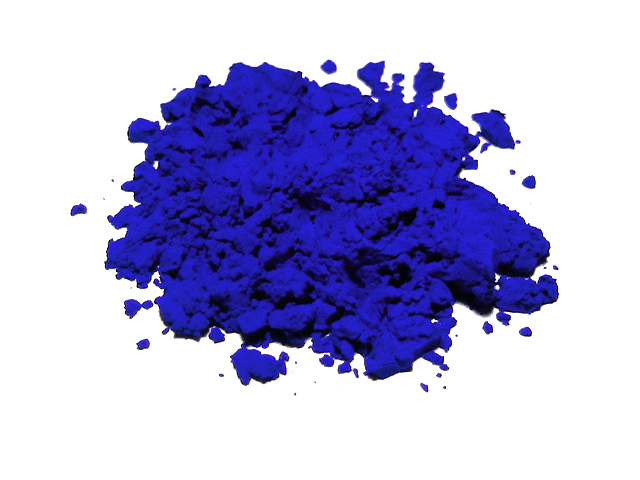
Natural ultramarine was ground from lapis lazuli, a semi-precious stone found in commercial quantity in only a few locations in the world (historically, primarily Afghanistan), then shipped enormous distances before it ever reached a European painter's workshop — the cost reflected genuine material scarcity and transport distance, not an arbitrary price.
In practice: This is exactly why Renaissance painters reserved natural ultramarine for their most important subjects — a real economic constraint, not an artistic rule about which subjects 'deserved' blue.
Why Prussian blue mattered for affordable colour
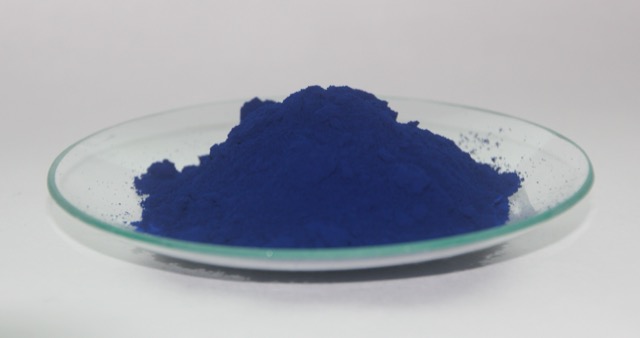
Before Prussian blue's accidental discovery around 1706, a strong, stable blue meant paying for natural ultramarine's enormous cost — Prussian blue was significantly cheaper to produce and is widely credited as the first modern synthetic pigment, genuinely changing what a working painter (not just a wealthy patron) could afford to use.
In practice: Prussian blue's affordability is a real, documented milestone in the much longer story of colour becoming cheaper and more widely available — a trend that continued through the 19th-century synthetic-dye boom.
Why vermilion carries a health warning today
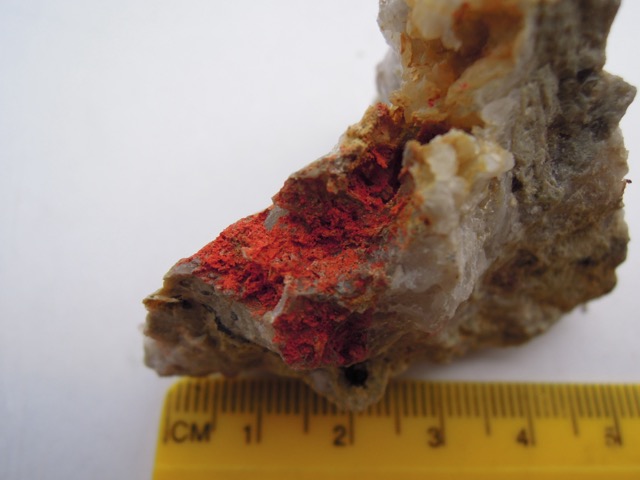
Vermilion was historically produced by grinding cinnabar, a mercury sulfide mineral — genuinely useful as a vivid, stable red, but also genuinely toxic, and historical painters and decorators who worked with it had far less protection than modern safety standards would require.
In practice: Any historical object containing vermilion (a painting, a piece of lacquerware) should be handled with the same care a museum conservator would use — this is a real, documented hazard, not a historical exaggeration.
How indigo became a globally traded colour
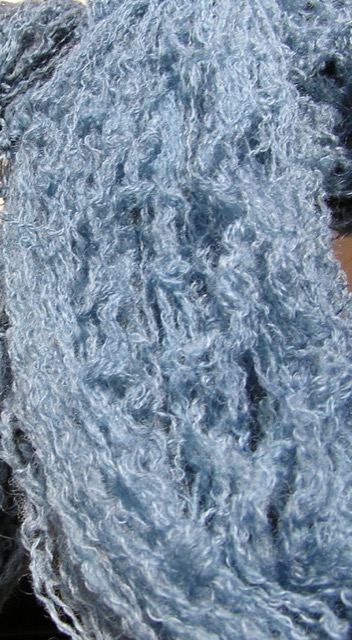
Indigo dye was independently developed and used by multiple cultures across Asia, Africa and the Americas for millennia before it became one of history's most significant traded commodities, carried along real trade routes between continents well before synthetic indigo production began in the late 19th century.
In practice: Indigo's genuinely global historical footprint is part of why blue-dyed cloth (from indigo-dyed textiles to modern denim) is recognisable across so many different cultural traditions.
Colour history reflects what materials, trade and technology made possible in a specific place and period — never one single, universal story. Every claim above is sourced and scoped rather than presented as a settled fact for all of history. See methodology.